
Stress rarely starts as a dramatic breakdown. More often, it looks like waking up tired after a full night in bed, feeling your jaw tighten in traffic, snapping at people you love, or carrying a low hum of tension that never quite turns off. When people search for the best wellness treatments for stress, they want something that may help them feel calmer, sleep deeper, think more clearly, and get their body back on their side.
That is why the right treatment depends on how stress is showing up for you. For one person, stress lives in the neck and shoulders. For another, it shows up as poor sleep, inflammation, headaches, digestive discomfort, or feeling wired and exhausted at the same time. The most effective approach is usually not the trendiest service. It is the one that matches your nervous system, your schedule, and your real-life stress load.
What makes the best wellness treatments for stress actually work?
Stress is not just a mental experience. It has a physical footprint. Muscles brace, breathing gets shallow, circulation may shift, sleep quality drops, and recovery slows down. Over time, that can leave you feeling stuck in survival mode even when nothing is actively wrong.
The best treatments tend to do one or more of three things. They may help the body shift out of tension, support deeper rest and recovery, or create a reliable ritual that tells your system it is safe to downshift. That is also why there is no single winner for everyone. If your stress is physical, body-based care may feel like the fastest relief. If your mind is racing, sensory deprivation or guided meditation may be more useful. If you feel depleted, gentle heat or light-based recovery may fit better than an intense session.
Massage therapy for stress that lives in the body
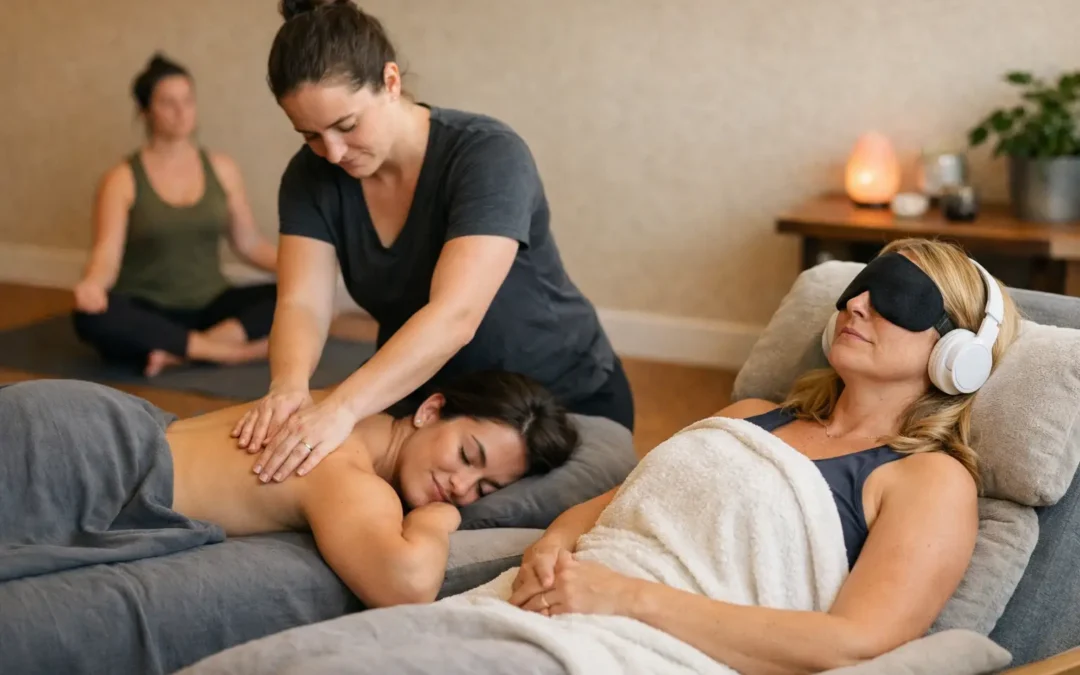
For many people, massage is still one of the most effective starting points. Not because it is indulgent, but because stress often settles into tissue before we fully notice it. Tight shoulders, a clenched jaw, low back tension, and headaches are common examples.
A personalized massage may help reduce physical guarding and create the kind of relief that makes it easier to breathe normally again. That matters more than it sounds. When your body stops bracing, your mind often follows. Deep tissue may be useful if stress has built into stubborn tension, but it is not always the best answer. If your system already feels overstimulated, a gentler, slower session may do more for relaxation and sleep.
This is where working with an experienced massage therapist in San Luis Obispo may matter. The best session is not the most intense one. It is the one tailored to how your stress is presenting that day.
Infrared sauna for stress, sleep, and mental fatigue
When stress leaves you feeling heavy, achy, and mentally foggy, full spectrum infrared sauna may be worth considering. Many guests describe it as a reset button. The warmth may help loosen muscle tension, encourage circulation, and create a deep sense of calm that lingers after the session ends.
It is especially appealing for people who have trouble slowing down through stillness alone. Sitting in warmth can feel easier than trying to meditate while your thoughts are sprinting. Some people also find that evening sauna sessions may support better sleep, though timing matters. If heat feels energizing to you, earlier in the day may be the better fit.
The trade-off is simple. If you are dehydrated, heat-sensitive, or already feeling run down, sauna may need to be shorter and more gradual. More is not always better.
Meditation pod sessions when your brain will not stop spinning
Some stress treatments work through the body first. Others work by changing your sensory environment. Meditation pod sessions can be surprisingly helpful for people who say, “I know I should meditate, but I can’t turn my mind off.”
A guided, immersive environment may make it easier to settle than trying to force calm in your living room with your phone buzzing nearby. This kind of treatment may help interrupt the loop of mental overactivity, especially for busy professionals, parents, and anyone who feels mentally “on” all day.
It also removes some of the pressure people place on themselves around meditation. You do not have to be good at it. You just have to be willing to pause. For some guests, that structured pause becomes the first thing that helps them feel emotionally rested in weeks.
Red light therapy for recovery-related stress
Not all stress is emotional. Sometimes the issue is that your body is under-recovered. Workouts, poor sleep, inflammation, and constant output can create a baseline of physical strain that makes you feel more stressed overall. Red light therapy may be helpful here because it supports recovery in a way that feels easy and non-invasive.
People often think stress relief has to feel soft or spa-like. Sometimes what the body needs most is support for restoration. When recovery improves, mood and resilience often improve too. That does not mean red light therapy is a cure-all. It means it may be a smart option if stress and physical fatigue are tightly linked for you.
Dry salt therapy for the person who needs to exhale
Dry salt therapy has a different feel than massage or sauna. It is quieter and less hands-on, but that can be exactly the point. For guests who feel overstimulated by constant noise, screens, and decision-making, simply sitting in a calm, controlled environment may feel deeply regulating.
This treatment may be especially appealing when stress is paired with shallow breathing or the feeling that you never quite take a full breath. There is a psychological effect to that kind of pause. Once breathing feels less restricted, people often report that the rest of the body starts to soften too.
Ballancer Pro for stress that comes with heaviness and sluggishness
Some people under stress do not feel wired. They feel puffy, sluggish, and weighed down. In those cases, recovery-focused compression with Ballancer Pro may be a better match than a standard relaxation treatment. It may support circulation and create a lighter feeling in the body, which many people find surprisingly calming.
This is a good example of why stress care should not be one-size-fits-all. If your version of stress includes feeling inflamed, stagnant, or uncomfortable in your body, choosing a treatment that addresses that physical sensation may bring more relief than trying to talk yourself into calm.
Cryotherapy for a fast nervous system reset
Electric whole body cryotherapy is not the first thing most people picture when they think about stress relief, but it has a place. For some guests, brief cold exposure feels clarifying and energizing, followed by a calmer, more centered state afterward. It may be especially useful for high performers, athletes, or anyone who feels mentally dull but physically tense.
That said, it depends on your stress pattern. If your system is already anxious and highly activated, cold may feel too stimulating. If you are dealing with fatigue, soreness, and a sense of burnout, it may feel like a reset. This is where professional guidance matters.
Ear seeds and small, steady support
Not every effective stress treatment has to be big. Ear seeds are a good example of low-effort support that may help people stay more regulated between appointments. They are subtle, simple, and often attractive to people who want something natural and easy to integrate into everyday life.
Think of them less as a dramatic intervention and more as a supportive nudge. For the right person, that is enough to make stressful days feel more manageable.
The best stress treatment is often a personalized combination
If there is one pattern that shows up again and again, it is this: stress responds well to consistency. A one-time session may feel amazing, but many people get better results from pairing treatments based on their goals. Massage and infrared sauna may work well for the person carrying physical tension. Meditation pod sessions and red light therapy may be a better fit for someone with poor sleep and mental overload. A parent in a demanding season of life may need shorter, more restorative visits instead of longer appointments that are hard to schedule.
At Sloco Massage + Wellness in San Luis Obispo, this is why personalized care matters. Guests often come in looking for massage therapy SLO locals trust, then realize their stress is connected to sleep, inflammation, recovery, or nervous system overload. When services are chosen around outcomes rather than trends, wellness feels less overwhelming and a lot more useful.
How to choose what fits you
Start with the clearest signal your body is giving you. If you are tight and uncomfortable, begin with massage. If you feel overstimulated and mentally noisy, try a meditation pod session or dry salt therapy. If your body feels worn down, consider infrared sauna or red light therapy. If you are curious but unsure, the best first step is often the gentlest one.
You do not need to become an expert in modalities to get relief. You just need a treatment plan that respects how stress is showing up in your life right now, and the flexibility to adjust as your body changes.
The goal is not to become stress-proof. It is to build enough support into your routine that stress stops running the whole show.